How Skipping Breakfast May Be Harming Your Mental Health
In today’s fast-paced world, skipping breakfast has become a common habit. Whether due to busy mornings, intermittent fasting trends, or simply lack of appetite, many people start their day without eating.
But what if that simple decision is quietly affecting your mental health?
Breakfast: More Than Just Fuel
Breakfast literally means “breaking the fast” after a night of sleep. During this time, your body has gone 8–12 hours without food, and your brain is running on depleted energy reserves.
Your brain relies heavily on glucose as its primary fuel. Without replenishing it in the morning, your cognitive functions may not perform at their best.
The Brain–Food Connection
When you skip breakfast, several things happen:
- Blood sugar levels remain low
- Cortisol (stress hormone) may rise
- Neurotransmitter production becomes less efficient
This can directly affect how you think, feel, and react throughout the day.
Mental Health Effects of Skipping Breakfast
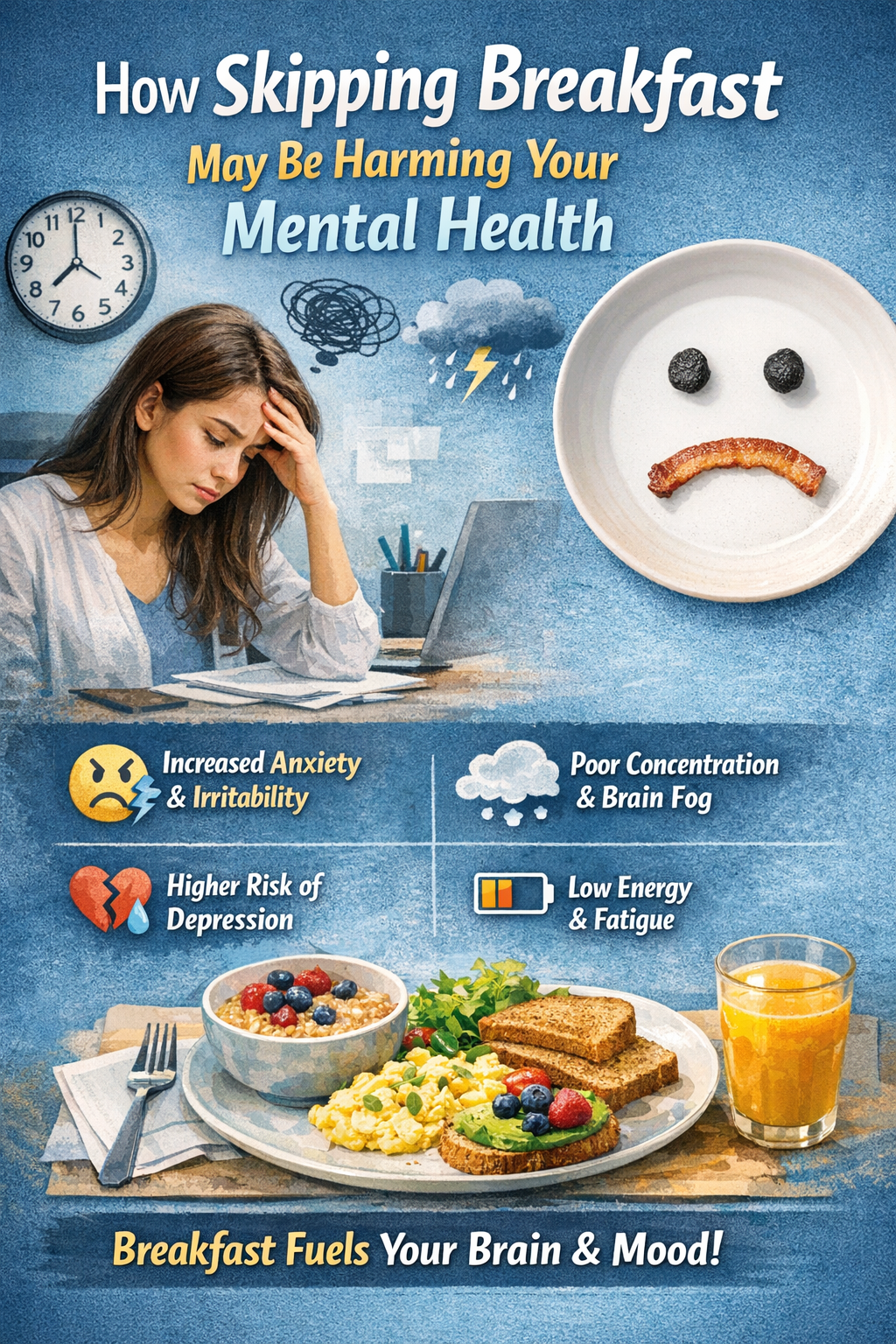
1. Increased Anxiety and Irritability
Low blood sugar can trigger symptoms similar to anxiety:
- Restlessness
- Nervousness
- Mood swings
You may find yourself more easily irritated—even by small things.
2. Poor Concentration and Brain Fog
Without proper fuel, your brain struggles to:
- Focus on tasks
- Retain information
- Process decisions efficiently
This is especially important for students and professionals.
3. Higher Risk of Depression
Studies have shown that people who regularly skip breakfast may have a higher risk of depressive symptoms.
Why?
- Reduced intake of essential nutrients
- Disruption in serotonin production (your “feel-good” hormone)
4. Fatigue and Low Motivation
Skipping breakfast often leads to:
- Mid-morning energy crashes
- Lack of motivation
- Reduced productivity
This creates a cycle where both physical and mental performance decline.
The Science Behind It
Your brain needs nutrients like:
- Glucose → energy
- Amino acids → neurotransmitters
- Vitamins (B-complex) → brain function
Without breakfast, your body struggles to maintain optimal levels of:
- Serotonin (mood regulation)
- Dopamine (motivation and focus)
What Makes a Good “Mental Health Breakfast”?
Not all breakfasts are equal. A healthy one should include:
✔ Complex carbohydrates (oats, whole grains)
✔ Protein (eggs, yogurt, nuts)
✔ Healthy fats (avocado, seeds)
Example:
- Oatmeal + banana + peanut butter
- Eggs + whole grain toast
- Yogurt + fruits + nuts
These combinations help stabilize blood sugar and support brain function.
What About Intermittent Fasting?
Some people skip breakfast intentionally for intermittent fasting. While this works for certain individuals, it may not be ideal for everyone—especially if you experience:
- Mood swings
- Difficulty concentrating
- Increased stress
👉 The key is to listen to your body.
Final Thoughts
Skipping breakfast might seem harmless, but over time it can impact your mental clarity, emotional stability, and overall well-being.
If you’ve been feeling:
- Easily irritated
- Mentally drained
- Unfocused
👉 Try starting your day with a balanced breakfast and observe the difference.
Takeaway
Your brain needs fuel just as much as your body does.
A simple morning meal can make a powerful difference in your mental health.